In today’s always-on digital world, streaming has become second nature. Users demand smooth playback on live sports, online education, gaming streams, and OTT platforms. There should be no buffering, lag, or excuses.
But behind the scenes, things get intense—especially during peak traffic. A viral event or sudden surge can push a platform to its limits. That’s where a high-bandwidth streaming server becomes the backbone of performance.
The real challenge isn’t just handling traffic—it’s maintaining consistency when demand spikes unexpectedly. Let’s break down how modern streaming systems handle this pressure without breaking.

Understanding Peak Traffic in Video Platforms
Peak traffic doesn’t just mean “more users.” It’s a completely different level of demand.
For example:
- A cricket final is streaming live
- A blockbuster movie release at midnight
- A viral influencer is going live
In these moments, a peak traffic video platform may experience traffic 10x or even 100x higher than normal. The system must:
- Handle thousands (or millions) of concurrent users
- Deliver content without delay
- Adapt instantly to changing load
If the infrastructure isn’t prepared, users face buffering, crashes, or complete downtime—which directly impacts revenue and brand trust.
The Importance of High Bandwidth for Stable Streaming
People frequently think about bandwidth as just “speed,” but in streaming, it’s also capacity and consistency.
A streaming server with a lot of bandwidth makes sure:
- It is possible to send a lot of data at once.
- Many users can stream at the same time without problems.
- High-quality video (HD, 4K, or 8K) is sent without any loss of quality.
Bandwidth is the first thing that slows down during peak demand. Even the best optimization won’t help if your server can’t send enough data.
That’s why streaming services today spend a lot of money on:
- Network ports that can handle 1Gbps, 10Gbps, or even 100Gbps
- Plans for unlimited bandwidth
- Paths for routing that are better
How Auto-Scaling Keeps Everything Running Smoothly
One of the biggest breakthroughs in recent years is auto-scaling streaming.
Instead of relying on fixed server capacity, platforms now:
- Automatically increase resources when demand rises
- Reduce resources when traffic drops
- Balance load across multiple servers
Here’s how it works:
1. Real-Time Monitoring
The system constantly tracks:
- CPU usage
- Bandwidth consumption
- Active users
2. Trigger-Based Scaling
When thresholds are reached:
- New servers are deployed instantly
- Load is redistributed
3. Seamless User Experience
Users don’t notice anything—streams continue without interruption.
This dynamic scaling is essential for any video platform peak usage scenario. Without it, platforms either overpay for idle resources or crash during spikes.

Content Delivery Networks (CDN): The Silent Hero
A CDN is one of the most critical components in maintaining performance.
Instead of serving content from a single server:
- Content is distributed across global nodes
- Users connect to the nearest server
- Latency is reduced significantly
During peak usage:
- Traffic is spread across multiple locations
- No single server gets overwhelmed
This ensures that even if millions of users tune in simultaneously, the load is distributed efficiently.
Load Balancing: Distributing the Pressure
Load balancing works alongside scaling to ensure no single server is overloaded.
A load balancer:
- Distributes incoming traffic across servers
- Ensures equal workload distribution
- Redirects traffic if a server fails
For example:
- 10 servers handling 1 lakh users
- Each server manages 10,000 users instead of one handling all
This architecture is critical for maintaining streaming server performance 2026, where user expectations are extremely high.
Hybrid Streaming Infrastructure: The Future-Proof Approach
Modern platforms don’t rely on a single setup anymore. Instead, they use a hybrid streaming infrastructure.
This means combining:
- Dedicated servers (for stability)
- Cloud servers (for scalability)
- CDN networks (for delivery)
Why Hybrid Works Best:
1. Reliability
Dedicated servers handle core workloads without fluctuation.
2. Scalability
Cloud resources expand instantly during peak demand.
3. Cost Optimization
You only pay for extra resources when needed.
This hybrid model ensures:
- No downtime during traffic spikes
- Faster response times
- Better control over performance
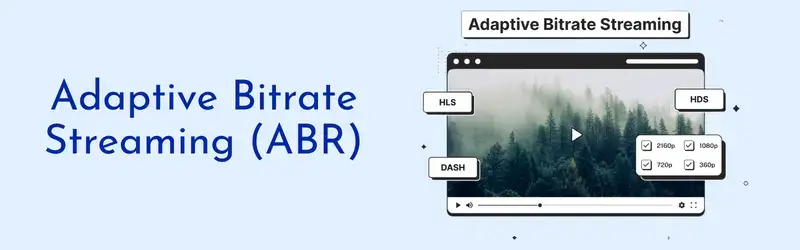
Adaptive Bitrate Streaming (ABR)
Not all users have the same internet speed. That’s where adaptive streaming comes in.
ABR automatically adjusts video quality based on:
- User’s internet speed
- Device capability
- Network conditions
So during peak load:
- Users with slower connections get lower resolution
- Users with faster connections get HD/4K
This prevents buffering and ensures smooth playback for everyone.
Edge Computing for Faster Delivery
Edge computing brings processing closer to the user.
Instead of sending requests to a central server:
- Data is processed near the user location
- Response time is reduced
- Server load is minimized
During peak events:
- Edge nodes handle a portion of traffic
- Core servers stay stable
This plays a huge role in maintaining consistent streaming performance.
Efficient Encoding & Compression
Streaming isn’t just about sending data—it’s about sending it efficiently.
Modern platforms use:
- Advanced video codecs (H.265, AV1)
- Compression algorithms
- Optimized file sizes
This reduces:
- Bandwidth usage
- Server load
- Buffering issues
So even during high demand, the system performs efficiently.
Intelligent Caching Mechanisms
Caching stores frequently accessed content closer to users.
For example:
- Popular videos are cached on edge servers
- Repeated requests don’t hit the main server
During peak usage:
- Most traffic is served from cache
- Core servers handle only new requests
This significantly reduces load and improves performance.
Redundancy & Failover Systems
No system is perfect. That’s why redundancy is essential.
Streaming platforms maintain:
- Backup servers
- Duplicate data centers
- Automatic failover systems
If one server fails:
- Traffic is instantly redirected
- Users experience no downtime
This ensures reliability even during extreme traffic spikes.
Network Optimization Techniques
Performance also depends on how data travels across the network.
Advanced techniques include:
- Route optimization
- Packet prioritization
- Traffic shaping
These ensure that:
- Streaming data gets priority
- Latency is minimized
- Data loss is reduced
Security During Peak Traffic
High traffic also attracts security risks.
Platforms must protect against:
- DDoS attacks
- Unauthorized access
- Data breaches
Security measures include:
- Firewalls
- Traffic filtering
- Rate limiting
Without proper security, peak traffic can become a vulnerability.

Monitoring & Analytics
You can’t manage what you don’t measure.
Modern platforms use real-time analytics to track:
- Viewer count
- Buffering rates
- Server health
- Network performance
This allows teams to:
- Identify issues instantly
- Optimize performance on the fly
- Improve future scalability
Real-World Example Scenario
Let’s say a live sports event starts at 7 PM.
Here’s what happens:
- Traffic begins to spike
- Auto-scaling adds more servers
- CDN distributes content globally
- Load balancer spreads users evenly
- ABR adjusts video quality per user
- Edge servers handle local requests
Result:
- No buffering
- No downtime
- Smooth streaming for millions
Why Consistency Matters More Than Speed
Users don’t just want fast streaming—they want consistent streaming.
- Frustrate users
- Increase drop-off rates
- Damage brand reputation
That’s why modern infrastructure focuses on:
- Stability over raw speed
- Predictability over bursts
The Future of Streaming Server Performance
Looking ahead, streaming server performance 2026 will evolve further with:
- AI-driven traffic prediction
- Smarter auto-scaling algorithms
- Ultra-low latency streaming
- 5G-powered delivery
- Decentralized edge networks
Platforms that adopt these technologies will stay ahead of the competition.
Final Thoughts
It’s not enough to just have powerful servers to handle peak demand; you also need to establish an ecosystem that is smart, scalable, and strong.
A well-designed system combines:
- High bandwidth capacity
- Auto-scaling capabilities
- CDN distribution
- Hybrid infrastructure
- Real-time monitoring
Together, these elements ensure that even during massive spikes, your platform delivers a flawless experience.
Because at the end of the day, users don’t care about your infrastructure—they just want their video to play without interruption.