If you are working on SEO, chances have come across the term domain authority. It’s one of those metrics that gets mentioned in audits, backlink discussions, competitor analysis, and client reports all the time. But many website owners still do not fully understand what is Domain Authority, how it works, and whether it should be treated as a real ranking factor.
The truth is simple: domain authority is not a Google ranking factor, but it is still a useful SEO metric when used the right way. It helps you understand the overall strength of your domain compared to others, especially in terms of backlinks, trust, and your ability to compete for search visibility. A higher domain authority score often means your website has built stronger signals over time, which can make it easier to rank for competitive keywords.
That said, domain authority score is not something you improve overnight. You cannot simply tweak a few settings and expect your score to jump. Real improvement comes from building a trustworthy website, publishing helpful content, earning quality backlinks, strengthening your technical SEO, and creating a site that people actually want to mention and link to.
In this guide, we will break down what domain authority is, why it matters, what affects it, and how to improve it in a practical and sustainable way.
What Is Domain Authority?
Domain authority is a statistic that forecasts how effective a website’s domain will be in search results when compared to other websites. It is commonly presented on a scale of 1 to 100, with a higher score indicating a stronger domain.
Google did not assign the score. Third-party SEO tools developed it to assist marketers in estimating a domain’s ranking potential based on criteria such as:
- backlink profile
- quality of referring domains
- trust and relevance of links
- overall SEO strength of the domain
- link growth patterns
Is Domain Authority a Google Ranking Factor?
This is where most folks get confused.
No, domain authority does not directly affect Google ranking.
Google does not utilize a third-party score known as domain authority to determine where your website should rank. However, many of the factors that influence domain authority are also those that promote real SEO success, such as:
- earning quality backlinks
- publishing valuable content
- improving site structure
- gaining topical relevance
- increasing trust over time
So while Google may not care about your exact domain authority score,, it does care about the signals that usually help improve that score.
That is why domain authority is best used as a comparative metric, not as the final measure of SEO success.
Why Domain Authority Matters
Even while domain authority is not a direct ranking factor, it is nonetheless valuable for a variety of purposes.
1. It helps you benchmark your website
If your website has a lower domain authority score than your top competitors, it can indicate that you may need stronger backlinks, better content, or more trust signals to compete.
2. It shows relative SEO strength
The score gives a broad idea of how strong your domain looks compared to others in your industry or niche.
3. It helps with backlink strategy
When building links, website owners often use domain authority as a quick way to evaluate whether a website may be worth targeting for outreach, guest posting, or partnerships.
4. It supports competitor analysis
You can compare your domain with competing sites and understand where you stand in the market.
5. It tracks long-term growth
Over time, a gradual improvement in domain authority may reflect better link quality, stronger content visibility, and growing website trust.
What Is Considered a Good Domain Authority Score?
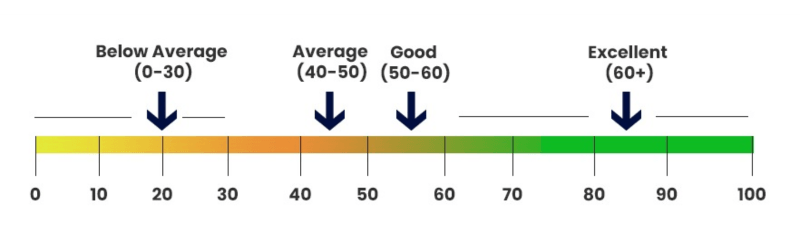
There is no single “good” score that applies to all industries. A good domain authority score is determined by the niche, competition, and type of website you run.
- 1–20: New or small websites with limited backlink strength.
- 21-40: Growing websites with some SEO progress.
- 41 to 60: Strong websites with solid backlink profiles
- 61 to 80: Highly authoritative websites in competitive markets
- 81 to 100: Major brands, publishers, and industry leaders
A score of 25 may be excellent in a niche with weak competition, while a score of 45 may still be low in a highly competitive space.
What Affects Domain Authority?
Domain authority is influenced by multiple SEO-related factors, especially those linked to off-page trust and domain strength.
Backlink quality
Links from trustworthy, relevant, and established websites usually help much more than links from weak or spammy websites.
Number of referring domains
A website with backlinks from many unique quality domains often looks stronger than one with many links from only a few sources.
Link relevance
Links from websites in your industry or related topics tend to be more valuable than random, unrelated links.
Link profile health
If your site has too many low-quality, manipulative, or suspicious links, it can hurt the overall strength of your backlink profile.
Content quality
High-quality content attracts links naturally. Strong content improves visibility, credibility, and link opportunities.
Internal SEO foundation
A technically sound website with crawlable pages, good structure, and useful content supports long-term SEO growth and helps improve domain authority over time.
Domain trust and age
Older domains with a history of consistent quality often build more trust than new domains, though age alone does not guarantee authority.
Domain Authority vs Page Authority
Domain Authority
This measures the overall strength of the entire domain.
Example: example.com
Page Authority
This measures the ranking strength of a specific page on the website.
Example: example.com/blog/domain-authority-guide
A website may have a strong domain authority overall, but some pages may still have weak page authority if they have not earned links or relevance individually. Likewise, a single page can perform well even on a lower-authority website if the content is excellent and well-optimized.
Common Misunderstandings About Domain Authority
Myth 1: Higher domain authority guarantees higher rankings
Not always. A lower-authority site with highly relevant content and better search intent alignment can still outrank a stronger domain.
Myth 2: Domain authority should be the main SEO goal
It should not. Your real goal should be better visibility, relevant traffic, leads, sales, or conversions. Domain authority is just one supporting metric.
Myth 3: More backlinks always mean better authority
Quantity alone is not enough. Ten strong, relevant backlinks can be more valuable than hundreds of weak ones.
Myth 4: You can increase domain authority quickly
Real authority usually takes time. Sudden link spikes from poor-quality sources may do more harm than good.
Myth 5: Every website should aim for a score above 70
That is not realistic for most businesses. What matters more is outperforming competitors in your own niche.
How to Increase Your Domain Authority
Now let us get to the part most website owners care about: how to improve domain authority in a real and sustainable way.
1. Focus on High-Quality Backlinks
Backlinks remain one of the best indicators of domain authority. However, not all links are equal.
A backlink from a reputable, relevant, and well-known website is significantly more useful than dozens of low-quality connections from untrustworthy directories or blogs.
What to do:
- earn links from websites in your niche
- create content people naturally want to reference
- build relationships with bloggers, publishers, and businesses
- contribute guest posts on relevant sites
- get listed on credible local or industry directories
- turn brand mentions into backlinks
What to avoid:
- buying spammy links
- using private blog networks
- mass directory submissions
- low-quality comment links
- irrelevant forum spam
A clean, strong backlink profile grows authority far more effectively than aggressive shortcut tactics and is one of the best ways to improve domain authority.
2. Create Link-Worthy Content
If your content is average, people have little reason to link to it. If your content is genuinely useful, original, and easy to understand, backlinks can come naturally over time.
The best content for earning links usually includes:
- detailed how-to guides
- original research
- case studies
- comparison posts
- checklists
- statistics roundups
- industry insights
- useful tools or calculators
When you publish content that solves a problem better than existing pages, other websites are more likely to mention it.
3. Improve Your Internal Linking
Internal linking does not directly create domain authority the same way backlinks do, but it supports your SEO foundation and helps distribute strength across your site.
Good internal linking can:
- help search engines crawl your pages better
- connect related content
- pass value from strong pages to weaker ones
- improve user navigation
- reduce orphan pages
Best practices:
- link relevant pages naturally within content
- use clear anchor text
- connect blog posts to service pages where relevant
- maintain category and topic clusters
- ensure important pages are not buried deep
4. Remove or Reduce Toxic Links
Not every backlink helps. Some links may come from spammy, irrelevant, or suspicious sites. A poor backlink profile can weaken trust and affect your domain’s overall health.
You should regularly review your backlinks and look for patterns such as:
- unrelated foreign domains
- spam directories
- automated links
- suspicious anchor text
- large numbers of low-quality referring domains
If needed, clean up risky links through outreach or disavow processes where appropriate. The goal is not to obsess over every bad link, but to avoid a profile filled with manipulative or harmful backlinks. This can also help improve domain authority in the long run.
5. Strengthen Technical SEO
A technically poor website struggles to perform well, even if it has decent content and backlinks. Technical SEO helps ensure your website is accessible, crawlable, fast, and stable.
Areas to improve:
- site speed
- mobile responsiveness
- crawlability
- broken links
- redirect issues
- duplicate content
- missing metadata
- poor URL structure
- indexing errors
- HTTPS security
While fixing technical SEO may not instantly increase domain authority, it helps your content perform better and supports the overall trust and quality of your domain.
6. Publish Content Consistently
Authority is rarely built on one article. It grows when a website consistently publishes helpful, relevant, and high-quality content over time.
A website that covers its niche deeply tends to build more topical trust than one that posts once in a while without clear direction.
Aim for content that:
- answers real user questions
- targets relevant keywords
- matches search intent
- stays updated over time
- covers topics in depth
- adds unique value
Consistency helps your domain grow in visibility, attract links, and build a stronger reputation.
7. Build Topical Relevance
Both search engines and visitors place higher faith in websites that cover a topic in a meaningful and orderly manner.
8. Improve On-Page SEO
On-page SEO may not directly control domain authority, but it helps your content rank better, reach more people, and attract more backlinks naturally.
Key on-page areas:
- strong title tags
- compelling meta descriptions
- clear H1 and H2 structure
- proper keyword placement
- readable formatting
- image optimization
- relevant internal links
- clear calls to action
- user-friendly URLs
Good on-page SEO makes your content easier to consume and more likely to succeed.
9. Increase Brand Mentions and Online Trust
Links are not the sole way to build authority. It’s also important for brands to be seen and trusted.
Even if you don’t obtain a direct link every time, when people talk about your business online, it can still help your internet visibility. Some of those mentions may become links, partnerships, traffic, or branded searches over time.
Ways to increase brand presence:
- publish expert content
- appear in interviews or podcasts
- share useful insights on social platforms
- run PR campaigns
- participate in industry communities
- get featured on resource pages
- encourage satisfied clients to mention your brand
A website that people recognize and trust often earns better organic opportunities.
10. Be Patient and Track Progress the Right Way
Checking domain authority too often and expecting substantial changes is one of the biggest mistakes individuals make.
Authority usually becomes better over time. SEO is a long-term game, especially if you are doing it the proper way.
Track the right signals alongside domain authority:
- organic traffic growth
- keyword rankings
- new referring domains
- backlink quality
- indexed pages
- conversions from organic traffic
- top-performing content
- competitor gap reduction
A small rise in authority with strong growth in traffic and leads is often more meaningful than chasing a score alone.
A Practical Strategy to Improve Domain Authority
If you want a realistic roadmap, here is a simple approach:
Month 1: Audit and fix
Start by reviewing your current domain, backlinks, technical SEO, broken pages, and content quality.
Month 2: Improve core pages
Strengthen your most important service pages, homepage, and key landing pages with better content and internal linking.
Month 3: Publish supporting content
Create blog posts, guides, FAQs, and comparison pages around your niche to build topical depth.
Month 4: Start quality outreach
Promote your best content, build partnerships, seek guest posting opportunities, and earn relevant backlinks.
Month 5 onward: Keep improving
Continue publishing useful content, tracking backlinks, updating old articles, and expanding your topical coverage.
This type of steady strategy works far better than trying random quick-win SEO tricks.
What Not to Do If You Want Better Domain Authority
Sometimes the fastest way to damage your SEO is by trying too hard to game it.
Avoid these mistakes:
- buying cheap bulk backlinks
- publishing thin or copied content
- overusing exact-match anchor text
- chasing links from irrelevant sites
- ignoring technical SEO problems
- creating pages only for search engines, not users
- obsessing over score instead of business results
- expecting instant improvement
A healthy domain grows through trust, relevance, usefulness, and consistency.
Should Small Businesses Worry About Domain Authority?
Yes, but to a reasonable level.
If you own a small company website, domain authority can help you determine how strong your online presence is in comparison to others in your industry. However, it should not become a distraction.
For most small firms, the best priorities are:
- building service pages that convert
- ranking for local and niche keywords
- earning a few high-quality backlinks
- publishing helpful content regularly
- improving website speed and user experience
- gaining visibility where customers actually search
If you do those things well, your domain authority score will often improve naturally over time.
How Web Hosting Supports Domain Authority
While domain authority is mainly influenced by backlinks and content quality, reliable web hosting still supports your SEO foundation. Better uptime, faster loading speed, and stable server performance help create a smoother user experience, which supports long-term website growth and trust.
Final Thoughts
Domain authority is a valuable SEO indicator, but it should be considered as a comparative score rather than the ultimate measure of SEO performance.
A higher domain authority score may indicate stronger backlinks, increased trust, and a greater capacity to compete in search results. But it is not something to pursue mindlessly. Real development comes from continually doing the right things, such as providing high-quality content, improving technical SEO, acquiring relevant backlinks, enhancing your website structure, and developing a brand that people trust.
So, if you want to raise your domain authority, avoid looking for shortcuts. Concentrate on creating a website that deserves to rank.
That is the kind of authority that lasts.