Introduction: The Role of RAM in Web Hosting
When selecting a web hosting service plan—like shared hosting, cloud VPS, or dedicated server hosting—one hosting server resource that often doesn’t get the same attention as CPU and storage is memory, or RAM. However, RAM is important to the overall efficiency of your website or application.
RAM is critical when it comes to processing incoming requests, storing cached data, running server-side scripts, and supporting database queries. In modern hosting environments, where the demands of content-heavy websites, eCommerce solutions, and real-time applications continue to rise, memory speed and efficiency can determine performance.
The jump from DDR4 to DDR5 memory is arguably one of the biggest generational upgrades in server hardware we have seen in recent memory. This blog aims to illustrate the differences between DDR4 vs DDR5 in a real-world capacity, while also identifying whether moving to DDR5 will benefit your hosting requirements.
DDR4: The Trusted Memory Standard
DDR4 RAM has served as the standard for both personal and server computers for almost a decade already. DDR4 is appreciated for its balance of performance, price, and reliability, which is why it is the primary memory option in most web hosting deployments—especially VPS hosting and entry-level dedicated servers.
It typically runs from 1600 MT/s to 3200 MT/s and uses approximately 1.2 volts, meaning that DDR4 is more energy-efficient than other RAM types. DDR4 supports memory module sizes up to 64GB, and as such, it is commonly considered a high-performing memory type, providing adequate performance for most general-purpose hosting needs. Whether it’s WordPress websites, SaaS applications, or multi-site deployments, DDR4 typically performs the job adequately for more than 90% of users.
Nevertheless, with the consistent growth of website traffic and migration to cloud-native and AI-driven applications, DDR4 is beginning to show its limits—in bandwidth-intensive scenarios.
What Makes DDR5 Different?
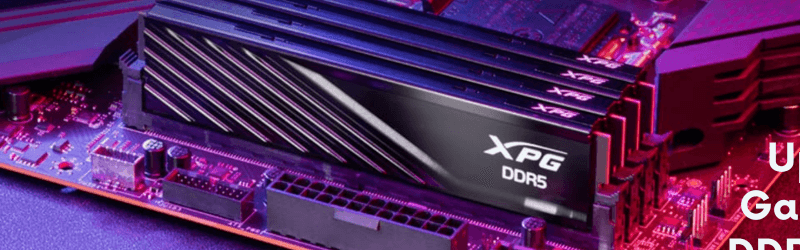
The implemented DDR5 RAM is built for the future. Released to combat the high demand for better memory bandwidth and optimum efficiency, DDR5 showcases big improvements across practically every measurable metric.
When it comes to data transfer rates, the DDR5 memory starts at 4800 MT/s and is capable of exceeding 8000 MT/s on newer modules. The voltage is slightly lower at 1.1V, yielding even greater energy efficiency. A major upgrade is module capacity: DDR5 can support upwards of 128GB per stick, which is double the previous ceiling capability of DDR4.
DDR5 also includes dual-channel architecture on single modules allowing better parallel data processing, which yields better multitasking capabilities and reduced latency on heavy loads. Hosting providers are increasingly offering DDR5 options as part of their premium options, especially for workloads including big data, containerized workloads and machine learning.
Simply put, DDR5 is not only faster, it is smarter, more scalable, and at the forefront of web hosting.
Performance Comparison: DDR4 vs DDR5 in Hosting Environments
It’s not just about speed when comparing DDR4 and DDR5; it’s about performance on hosting. DDR5 can dramatically lower the time taken to process multiple requests at the same time, load dynamic content, or execute background services on a hosting server.
Here’s a quick technical comparison:
| Specification | DDR4 | DDR5 |
|---|---|---|
| Base Data Rate | 1600–3200 MT/s | 4800–8400+ MT/s |
| Voltage | ~1.2V | ~1.1V |
| Channels per DIMM | 1 | 2 |
| Power Management | On motherboard | On-module (PMIC) |
| Latency | Lower | Slightly higher, but offset by bandwidth gains |
| Max Module Size | 64GB | 128GB |
For most hosts, DDR4 is still fine. However, for hosting configurations that highly leverage concurrency, high volume databases, or real time analytics, DDR5 will begin to show its capabilities.
Imagine if your cloud VPS had to handle 200+ concurrent users conducting dynamic searches. DDR4 might get through this, but DDR5 will get through faster with less CPU-load and cache execution. Overall users will have a smoother experience with less timeouts and server lag.
Impact on Cloud VPS and Dedicated Hosting
In cloud VPS environments, memory bandwidth and allocation efficiency are vital because multiple virtual machines share the same physical hardware. That’s where DDR5 is key. By significantly increasing throughput to offer each VPS more equal and consistent access to memory resources, even in high-stress situations, performance will be more stable.
For dedicated hosting, using DDR5 and its capacity and speed is even more effective than cloud VPS. Businesses hosting content-heavy web properties, like eCommerce portals, learning management systems, video streaming services, or any facilities that have memory intensive workloads, benefit greatly from using DDR5. More memory per module means larger caches, more containers, and many more processes before you start experiencing memory swapping or general slowdown./
Additionally, even with median hosting needs such as hosting multiple client websites on one server, DDR5 provides the performance requirements to keep that feeling snappy even when the workloads increase. It becomes increasingly useful if you are running anything like Redis, Elasticsearch, PostgreSQL, or any application that will consume your memory resources.
Who Should Upgrade to DDR5?
Deciding to upgrade will depend on the type of hosting you are using and the size of your web operations.
If you share hosting or have a few low-level websites, DDR4 is still more than suitable. The performance difference has the potential to be negligible and not worth the cost of the upgrade.
However, for the reasons below, being on DDR5 is a good investment:
- Hosting providers servicing numerous client sites or applications
- SaaS organizations operating backend services or APIs with high I/O
- Retailers who run high traffic concurrent online stores using WooCommerce, Magento, or Shopify
- Companies performing big data data analysis, AI model training, or ingestion of continuous data
- Game server providers and media streaming platforms needing low latency and high throughput
- Developers utilizing staging servers for CI/CD pipeline, testing, and automation pipelines.
DDR5 is more than just about performance today, it is also about protecting ourselves for the future. Websites and apps are ever more complex and require more processing power. There will be a growing demand to perform tasks that may be exhausting for our current memory specifications.
Final Thoughts: Is DDR5 the Future of Hosting?
The answer is yes—DDR5 is paving the way for the next generation of high-performance hosting infrastructure. It is true that DDR4 is still efficient and supports a broader range of workloads, and will continue to provide the needed improvement, however the DDR5 improvements are just too great to overlook long term.
From improved data speeds to increased memory, improved power efficiency, and improved performance under load, DDR5 provides hosting providers—and the end user—competitive advantage.
If you are starting a new project, managing infrastructure, or even looking to improve server performance, it is worth checking with your hosting provider to see if DDR5 is supported. More providers are making the jump to DDR5-based VPS and dedicated servers, more so for enterprise hosting, managed WordPress hosting, and cloud-native environments.
In a market that has many potential avenues for success or failure, a server memory upgrade could be one of the best investments you can make in 2025 and beyond.