Best Dedicated Server for IPTV Streaming
IPTV streaming has become one of the fastest-growing ways to deliver video content across the internet. From live TV channels and sports events to educational content, entertainment platforms, and private media networks, IPTV depends heavily on powerful server infrastructure. A poor server can lead to buffering, downtime, slow channel switching, and unhappy viewers. That is why choosing the Best Dedicated Server for IPTV Streaming is one of the most important decisions for any streaming business.
Unlike normal website hosting, IPTV hosting requires consistent bandwidth, strong network routing, stable uptime, and fast content delivery. Viewers expect videos to load instantly and play without interruption. Even a few seconds of buffering can damage the user experience. This is where dedicated servers become extremely useful.
For IPTV businesses targeting Asia, Europe, or global audiences, Singapore and the Netherlands are two highly preferred server locations. A reliable IPTV Streaming Server in Singapore can help deliver smooth streaming across India, Southeast Asia, Australia, and nearby regions. Similarly, an IPTV Streaming Server in Netherlands is ideal for reaching users across Europe, the UK, and many international markets.
In this blog, we will explain how dedicated servers help IPTV streaming, why Singapore and the Netherlands are popular locations, and what features you should check before choosing a server.

What Is an IPTV Dedicated Server?
An IPTV dedicated server is a physical server used to host, process, and deliver IPTV content through the internet. Unlike shared hosting or basic VPS hosting, a dedicated server gives you full access to server resources such as CPU, RAM, storage, bandwidth, and network capacity.
IPTV platforms usually need to handle multiple viewers at the same time. If many users are watching live channels or video-on-demand content, the server must send large amounts of data continuously. A weak hosting setup may not manage this load properly. This can result in lag, stream freezing, or service interruptions.
A dedicated server for IPTV gives better performance because resources are not shared with other users. You get more control over server configuration, streaming software, security settings, and bandwidth usage.This makes it suitable for live streaming platforms, OTT services, media companies, IPTV resellers, and private streaming networks.
Why Dedicated Servers Are Better for IPTV Streaming
IPTV streaming is bandwidth-heavy. A normal website may only load text, images, and small scripts, but IPTV continuously sends video data. The higher the video quality, the more bandwidth is required.
For example, HD and Full HD streams need stable network speed. If you are offering 4K streaming, the requirement becomes even higher. A dedicated server can handle this better than shared hosting because it is built for stronger workloads.
Another major benefit is server control. With dedicated hosting, you can install your preferred IPTV panel, streaming software, encoder, firewall, monitoring tool, and security configuration. You are not limited by shared hosting restrictions.
Dedicated servers also provide better uptime. IPTV users expect continuous access, especially for live channels. If the server goes down frequently, users may cancel the service.A good dedicated server reduces such risks and gives you a more stable foundation.
Why Server Location Matters in IPTV Streaming
Server location plays a major role in streaming quality. The closer your server is to your viewers, the faster the data travels. This reduces latency and improves video loading time.
If your audience is mainly in Asia, a server located in Europe may create higher latency. Similarly, if your audience is in Europe, hosting only in Asia may not give the best experience. Choosing the right location helps improve stream stability and user satisfaction.
Singapore and the Netherlands are two strong choices because both are well-connected international data center hubs. They offer good network routes, strong internet exchanges, and better connectivity to nearby regions.
IPTV Streaming Server in Singapore
An IPTV streaming server in Singapore is a strong choice for businesses targeting Asian markets. Singapore is known for its advanced data center infrastructure and excellent network connectivity. It connects well with India, Malaysia, Indonesia, Thailand, Vietnam, the Philippines, Australia, and other nearby regions.
For IPTV platforms with viewers in Asia-Pacific, Singapore can reduce latency and improve stream delivery. It is especially useful for live TV, sports streaming, educational streaming, regional entertainment platforms, and private media networks.
Singapore also has strong international bandwidth availability. This helps IPTV businesses handle traffic spikes during popular live events or peak viewing hours. If your audience watches content during evenings or weekends, you need a server location that can manage sudden demand without major performance drops.
Another reason Singapore is preferred is its business-friendly technology environment. Many global companies use Singapore as a digital hub for Asia. For IPTV streaming, this means better infrastructure, stable connectivity, and reliable routing.IPTV Streaming Server in Netherlands
An IPTV streaming server in the Netherlands is a popular option for streaming businesses targeting Europe and nearby international regions. The Netherlands has one of the strongest internet infrastructures in Europe and is home to major connectivity hubs.
For IPTV platforms serving users in Germany, France, the UK, Belgium, Spain, Italy, and other European countries, Netherlands servers can deliver low-latency performance. The country is also known for excellent peering, strong network routes, and high-capacity data centers.
A Netherlands dedicated server is useful for IPTV providers that need large bandwidth and stable international connectivity. Many streaming businesses choose the Netherlands because it offers a good balance of performance, pricing, and reach.
If your IPTV platform serves a European audience or mixed global users, the Netherlands can be a practical server location. It is also useful for backup streaming servers, content storage, and failover infrastructure.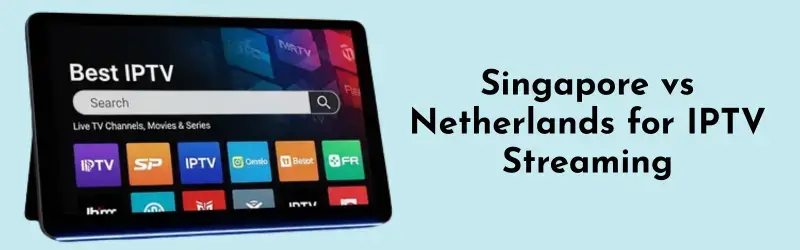
Singapore vs Netherlands for IPTV Streaming
Choosing between Singapore and the Netherlands depends mainly on your audience location.
If most of your viewers are in India, Southeast Asia, Australia, or nearby Asian regions, Singapore is usually the better choice. It provides faster routing and lower latency for Asian users.
If your viewers are mainly in Europe, the UK, or nearby international locations, the Netherlands can be a better option. It offers strong European connectivity and excellent bandwidth options.
For global IPTV platforms, using both Singapore and Netherlands servers can be even more effective. You can host primary streams in one location and use the other as a backup or regional distribution point. This improves availability and reduces dependency on a single data center.A smart IPTV setup may include multiple server locations, load balancing, CDN support, and backup streaming routes. This helps ensure users get stable video quality no matter where they are located.
Important Features of the Best Dedicated Server for IPTV Streaming
When choosing the best dedicated server for IPTV streaming, you should not only look at price. IPTV hosting needs performance, stability, and scalability. Here are the most important features to check.
1. High Bandwidth Capacity
Bandwidth is the backbone of IPTV streaming. The more viewers you have, the more bandwidth you need. If your bandwidth is limited, streams may slow down or stop once usage increases.
For IPTV, unmetered or high-bandwidth dedicated servers are usually preferred. A 1Gbps port may be suitable for smaller platforms, while larger IPTV businesses may need 10Gbps dedicated servers.
Before selecting a plan, estimate your average viewers, video quality, and daily streaming hours. This will help you choose the right bandwidth capacity.
2. Strong Network Uptime
IPTV services need continuous availability. If the server is down, users cannot watch content. This directly affects customer trust.
Look for servers with strong uptime, reliable data center infrastructure, and network monitoring. A good hosting environment should reduce unexpected downtime and provide stable connectivity.
3. Low Latency Network
Latency affects how quickly streams load and respond. For live IPTV, low latency is very important. High latency can cause delays, buffering, or slow channel switching.
Choosing the right server location helps reduce latency. Singapore is better for Asian audiences, while the Netherlands is better for European audiences.
4. Powerful CPU Performance
The CPU matters when your server handles stream processing, transcoding, control panels, or multiple concurrent connections. If you only serve pre-encoded streams, CPU usage may be moderate. But if your setup involves real-time transcoding, you need a stronger processor.
Intel Xeon, AMD EPYC, and similar server-grade processors are commonly preferred for streaming workloads.
5. Sufficient RAM
RAM helps the server manage multiple processes smoothly. IPTV panels, streaming software, databases, monitoring tools, and web services all consume memory.
For smaller IPTV setups, 16GB or 32GB RAM may be enough. Larger platforms may require 64GB RAM or more depending on traffic and software usage.
6. Fast SSD or NVMe Storage
Storage speed matters when hosting video-on-demand content. NVMe storage is faster than traditional HDD storage and helps improve file access speed.
For live IPTV only, storage may not be the biggest concern. But for VOD libraries, catch-up TV, and recorded content, fast storage improves user experience.
7. DDoS Protection
Streaming servers can sometimes become targets of DDoS attacks. A sudden attack can slow down or completely take the server offline.
DDoS protection helps filter harmful traffic before it reaches your server. For IPTV hosting, this is an important security feature, especially if your service has many users.
8. Root Access and Full Control
A dedicated server should provide root or administrator access. This allows you to install IPTV panels, configure firewall rules, manage ports, optimize server performance, and control the software environment.
Without root access, your flexibility becomes limited.
9. Scalability
Your IPTV platform may start small but grow over time. Choose a server provider that allows easy upgrades for bandwidth, storage, RAM, or server location.
Scalability helps you avoid major migration issues when traffic increases.
Bandwidth Planning for IPTV Servers
Bandwidth planning is one of the most important parts of IPTV hosting. Many beginners underestimate how much data streaming consumes.
If one viewer watches a 5 Mbps stream, 100 viewers may need around 500 Mbps of continuous bandwidth. If the number of viewers increases to 500, the requirement becomes much higher.This is why IPTV providers often prefer unmetered bandwidth or high-traffic dedicated server plans. It helps avoid overage charges and gives more predictable monthly costs.
You should also consider peak-time traffic. Your average viewers may be low during the day, but during sports events, movie releases, or evening hours, traffic can suddenly increase. A good streaming server should be ready for these spikes.
Security Tips for IPTV Dedicated Servers
Security should never be ignored in IPTV hosting. A poorly secured server can be attacked, abused, or misused.
Start with a strong firewall configuration. Only open the ports required for your IPTV software and control panel. Disable unnecessary services and keep your operating system updated.
Use strong passwords or SSH key authentication. Avoid using default login details for any IPTV panel or admin dashboard.
Regular backups are also important. If your server faces an issue, backup data can help restore service faster.
Monitoring tools are useful too. They help track CPU usage, RAM, bandwidth, disk space, and network activity. If something unusual happens, you can take action quickly.Legal and Compliance Considerations
IPTV technology itself is legal, but the content being streamed must be properly licensed or authorized. Before launching any IPTV service, make sure you have the right permissions to distribute the content.
Hosting providers may have strict policies against copyright violations, illegal streaming, spam, abuse, or harmful activities. Always read the terms of service before buying a server.
A professional IPTV business should focus on legal content delivery, secure infrastructure, and responsible usage. This protects both the business and the users.Who Needs a Dedicated Server for IPTV?
A dedicated server for IPTV is useful for many types of users and businesses, including:
- Live TV streaming platforms
- OTT content providers
- Sports streaming services with proper rights
- Educational video platforms
- Corporate training channels
- Religious or community streaming networks
- Video-on-demand platforms
- IPTV resellers and panel operators
- Media agencies and broadcasters
If your platform needs stable video delivery and high bandwidth, dedicated hosting is usually a better choice than shared hosting or low-end VPS hosting.
How to Choose the Right IPTV Server Configuration
The right server configuration depends on your use case.
For a small IPTV setup, you may start with a dedicated server that has a modern processor, 16GB to 32GB RAM, SSD storage, and a 1Gbps port.
For a growing IPTV platform, consider 32GB to 64GB RAM, NVMe storage, stronger CPU performance, and higher bandwidth allocation.
For large-scale streaming, a 10Gbps dedicated server, load balancing, multiple server locations, and backup infrastructure may be required.
Also check whether you need Linux or Windows. Many IPTV panels and streaming tools work well on Linux because it is lightweight, stable, and flexible. However, some software may require Windows.Why Singapore and Netherlands Are Strong IPTV Hosting Locations
Singapore and the Netherlands are both excellent choices because they serve different global regions.
Singapore is ideal for Asian traffic. It gives better speed to countries like India, Malaysia, Indonesia, Thailand, and Australia. If your viewers are mostly in Asia-Pacific, Singapore can give a smoother experience.
The Netherlands is ideal for European traffic. It offers excellent connectivity across Europe and is widely used for high-bandwidth hosting. If your audience is in Europe or nearby regions, a Netherlands dedicated server can be a strong option.
Using both locations can also help create a better global IPTV network. You can place content closer to users, reduce latency, and improve stream reliability.Common Mistakes to Avoid When Buying IPTV Servers
One common mistake is choosing the cheapest server without checking bandwidth. A low-cost server may look attractive, but if it has poor network quality, your users may face buffering.
Another mistake is ignoring server location. If your audience is in Asia but your server is far away, streaming quality may suffer.
Many users also forget about security. IPTV servers need protection against attacks, abuse, and unauthorized access.
Some businesses do not plan for growth. They buy a small server and later struggle when viewers increase. It is better to choose a provider that allows upgrades and additional servers when needed.Final Thoughts
Choosing the Best Dedicated Server for IPTV Streaming depends on your audience, bandwidth needs, server location, and long-term growth plan. IPTV streaming requires more than just basic hosting. It needs strong hardware, reliable networking, low latency, high bandwidth, and proper security.
An IPTV streaming server in Singapore is a great option for businesses targeting Asia-Pacific users, while an IPTV streaming server in the Netherlands is better suited for European and international audiences. Both locations offer strong advantages, and the right choice depends on where your viewers are located.
For serious IPTV platforms, dedicated servers provide the control, performance, and stability needed to deliver smooth streaming. Before choosing a server, review bandwidth limits, port speed, uptime, DDoS protection, storage type, CPU power, and scalability.
A well-planned IPTV server setup can reduce buffering, improve viewer satisfaction, and support business growth over time.