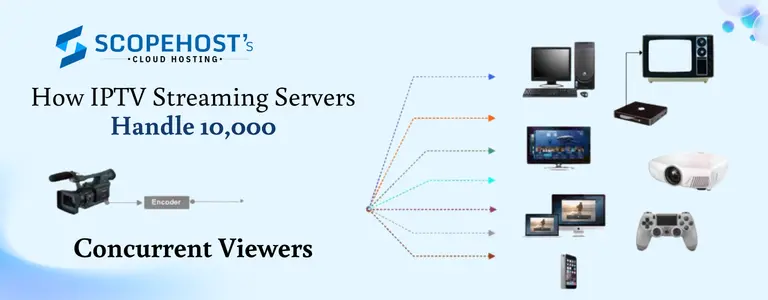
When people hear that an IPTV platform can serve 10,000 concurrent viewers, it sounds massive—and it is. But this scale is no longer limited to global media giants. With the right IPTV streaming servers, network design, and delivery architecture, serving thousands of simultaneous viewers has become both practical and achievable.
The real challenge is not simply streaming a video feed. It is maintaining quality when thousands of viewers press play at the same time, keeping buffering low, preventing crashes, handling bitrate changes, and making sure the stream stays online even during traffic spikes. Whether it is a live sports match, a news broadcast, a music event, or a regional entertainment channel, the system behind the stream has to work like a tightly coordinated machine.
In this article, we will break down how a modern video streaming server setup handles large traffic volumes, what infrastructure matters most, and why scalability is critical for IPTV performance.
Why 10,000 Concurrent Viewers Is a Technical Milestone
A few hundred viewers can often be managed by a decent single server with enough bandwidth. But when the number rises into the thousands, things change fast.
At 10,000 concurrent viewers, an IPTV platform must handle:
- continuous video delivery without lag
- thousands of active network connections
- sudden demand peaks during live events
- different screen sizes and connection speeds
- real-time stream processing
- stable uptime over long viewing sessions
Even a small inefficiency becomes a serious problem at this level. A server that works fine for 300 users may collapse under 10,000 if it lacks the right CPU, RAM, storage speed, port capacity, or traffic routing strategy.
That is why serious IPTV operations depend on high bandwidth streaming server infrastructure rather than ordinary hosting environments.
The Core Role of IPTV Streaming Servers
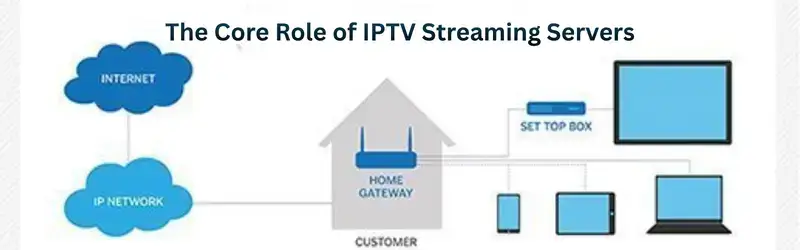
At the center of the system is the IPTV streaming server. Its job is not just to host files. It must receive, process, package, and distribute media streams efficiently.
Depending on the platform, the server may handle:
- live stream ingestion
- transcoding into multiple quality levels
- protocol conversion
- viewer authentication
- segment packaging for HLS or MPEG-DASH
- stream delivery to users or edge nodes
- monitoring and traffic control
A streaming server designed for IPTV has to be optimized for continuous delivery. Unlike normal websites, where users request a page and leave, streaming viewers keep pulling data every second. This creates a constant load on network throughput and system resources.
Step 1: Stream Ingestion and Source Stability
Every IPTV stream starts with a source. It may come from a broadcast feed, an encoder, a studio switcher, or another remote stream endpoint.
The first job of the server infrastructure is to ingest the stream reliably. If the source is unstable, the end viewer will feel it immediately. For that reason, good IPTV systems often use:
- redundant input sources
- backup encoders
- automatic failover feeds
- error correction during transmission
For example, if a main live feed drops during a cricket match or local event, the platform should be able to switch to a backup source without ending the stream. This is the first layer of reliability when supporting 10,000 concurrent viewers.
Step 2: Transcoding for Different Devices and Speeds
Not every viewer has the same internet speed or device capability. Some may watch on smart TVs with strong broadband, while others may use mobile networks with fluctuating speeds.
This is where transcoding becomes essential.
A single input stream is converted into multiple bitrate versions, such as:
- 240p for low-speed networks
- 480p for average mobile viewing
- 720p for standard HD
- 1080p for higher-quality playback
This technique allows adaptive streaming. The player automatically switches between quality levels based on network conditions. Without this, viewers with slower connections would face constant buffering.
Transcoding is one of the heaviest tasks in any video streaming server setup. It uses significant CPU or GPU resources, especially for live content. That is why many IPTV providers separate transcoding from delivery, using dedicated nodes for processing and separate servers for streaming output.
Step 3: Segment-Based Delivery Reduces Load
Modern IPTV platforms do not usually send one long uninterrupted media file. Instead, they break video into small chunks or segments, typically a few seconds long.
This helps in several ways:
- smoother playback
- easier bitrate switching
- better caching
- quicker recovery from network interruptions
- improved delivery over distributed systems
Protocols like HLS and MPEG-DASH are widely used because they are built for scalability. A viewer’s device keeps requesting small pieces of the stream, which makes large-scale delivery more manageable.
For a system serving 10,000 concurrent viewers, segment-based streaming is much more stable than pushing one continuous feed in an outdated format.
Step 4: Load Balancing Prevents Single-Server Failure
One server should never carry the full burden of a large IPTV audience. Even the strongest machine has limits. This is why load balancing is critical.
A load balancer distributes viewer traffic across multiple streaming nodes. Instead of sending all 10,000 users to one machine, the system may spread them across several delivery servers based on:
- current server load
- geographic proximity
- available bandwidth
- health checks
- session persistence rules
This improves stability and prevents overload during sudden traffic bursts. If one node fails, traffic can shift to another active server.
For live IPTV channels, this redundancy is not optional. It is one of the main reasons large-scale streaming platforms stay online during high-demand events.
Step 5: High Port Speed and Bandwidth Matter More Than People Think
Many people focus on CPU and RAM, but IPTV growth is often limited first by bandwidth.
Let’s say one viewer watches at 4 Mbps. If 10,000 viewers are watching simultaneously, that can theoretically require 40 Gbps of outbound traffic. Even with caching, adaptive bitrate, and mixed quality levels, bandwidth demand remains enormous.
That is why a high bandwidth streaming server usually includes:
- 1 Gbps, 10 Gbps, or higher network ports
- unmetered traffic options or very high transfer allowances
- premium upstream connectivity
- low packet loss and low latency routes
If the network is weak, even the best-configured server will struggle. IPTV is ultimately a traffic-heavy service, so network capacity is one of the biggest pillars of performance.
Step 6: CDN and Edge Delivery Improve Viewer Experience
A CDN, or Content Delivery Network, helps IPTV platforms scale beyond the origin server. Instead of forcing every viewer to connect directly to the main streaming node, content can be cached closer to the audience.
This reduces:
- origin server pressure
- international latency
- buffering issues
- network congestion during peak hours
For IPTV businesses targeting viewers across different cities or countries, CDN integration is often a game changer. Live content is more sensitive than static files, but modern CDN-supported workflows can still improve consistency significantly.
In practical terms, the main server handles stream generation and coordination, while CDN or edge locations help distribute the stream more efficiently to large audiences.
Step 7: Storage and Caching Support Playback Efficiency
For live TV, storage may seem less important than bandwidth. But storage still plays a role, especially for:
- catch-up TV
- time-shifted streams
- VOD libraries
- temporary segment storage
- replay features
Fast SSD or NVMe storage improves read/write performance and helps servers handle segment creation and retrieval more smoothly.
Caching also matters. Frequently requested segments can be stored in memory or on fast disks so they can be delivered repeatedly without stressing the origin process every time. This becomes especially important when many viewers are watching the same live channel at once.
Step 8: Monitoring and Auto-Recovery Keep Streams Alive
Large IPTV setups need constant monitoring. At 10,000 viewers, even a small issue can turn into a major outage in minutes.
Operators usually monitor:
- CPU usage
- memory consumption
- disk I/O
- bandwidth throughput
- active connections
- packet loss
- latency
- stream health
- error rates
Automated alerts help engineers react before the audience notices a problem. Some platforms also use auto-restart systems, backup nodes, and scripted failover mechanisms to keep live streams running with minimal interruption.
Strong monitoring is one of the most overlooked parts of IPTV streaming servers, but it directly affects uptime and viewer trust.
Step 9: Security Protects Performance Too
Security is not just about stopping attacks; it is also about protecting stream availability.
An IPTV service handling thousands of viewers can be targeted by:
- DDoS attacks
- unauthorized stream pulling
- hotlinking
- connection flooding
- token abuse
- account sharing misuse
To protect delivery quality, streaming platforms often use:
- tokenized URLs
- IP restrictions
- firewall rules
- anti-DDoS filtering
- viewer session controls
- stream encryption
Without proper protection, even a technically strong setup can suffer performance drops due to malicious or abusive traffic.
Single Server vs Clustered Streaming Architecture
A common mistake is trying to scale IPTV on one “very powerful” machine. That may work for a while, but it is risky.
A more reliable structure is a clustered architecture, where different components handle different jobs:
- ingestion server
- transcoding server
- origin streaming server
- edge or delivery nodes
- load balancer
- monitoring system
- backup failover node
This modular setup makes the platform easier to scale. If viewership grows from 10,000 to 20,000, more delivery nodes can be added without rebuilding everything from scratch.
That flexibility is one reason professional IPTV platforms invest in scalable infrastructure from the beginning.
What Actually Makes the Viewer Experience Smooth?
At the viewer level, people do not think about transcoding or network routing. They care about simple things:
- fast playback start
- no buffering
- stable picture quality
- minimal lag during live events
- smooth switching between channels
- reliable uptime
All the technical layers we discussed exist to achieve these results. A good IPTV platform feels simple to the end user because the backend is handling complexity properly.
Final Thoughts
Handling 10,000 concurrent viewers is not about one powerful box doing all the work. It is about architecture. Reliable IPTV streaming servers combine stream ingestion, transcoding, load balancing, segment delivery, caching, strong bandwidth capacity, security, and monitoring into one scalable ecosystem.
The more live traffic an IPTV platform expects, the more important infrastructure decisions become. Low-latency delivery, multi-bitrate streaming, redundancy, and network quality are no longer “advanced options”—they are baseline requirements for stable growth.
For businesses, broadcasters, resellers, or media platforms planning large-scale IPTV delivery, the right server environment can be the difference between a smooth live event and a frustrating stream failure. And when audiences grow, scalable design always wins over short-term shortcuts.