Python has become one of the most powerful and widely used programming languages in the world. From web development and automation to artificial intelligence and data science, Python powers many modern applications. Popular frameworks such as Django, Flask, and FastAPI have made Python a preferred choice for developers building scalable web applications.
To run these applications successfully online, developers need reliable hosting for Python apps that supports Python frameworks, libraries, and server configurations. Choosing the right Python hosting server ensures that your application performs efficiently, remains secure, and can scale as your traffic grows.
If you are hosting Python applications online, choosing the right infrastructure such as VPS hosting or cloud hosting can significantly improve performance and scalability.
In this guide, we will explore everything about Python web hosting, including the best hosting options, setup process, performance optimization techniques, and how to select the best Python hosting provider for your project.

What is Python Web Hosting?
Python web hosting refers to hosting services specifically optimized to run Python-based applications and frameworks. Unlike traditional hosting designed mainly for PHP applications, Python hosting environments provide support for Python interpreters, libraries, and frameworks required to run web apps.
A Python hosting environment typically includes:
- Python interpreter support (Python 3.x versions)
- Web servers such as Gunicorn or uWSGI
- Support for frameworks like Django, Flask, and FastAPI
- Database integration (PostgreSQL, MySQL, MongoDB)
- Virtual environments
- SSH access for deployment
- Process managers for application monitoring
Most developers prefer hosting solutions that provide root access and flexible server configuration such as Linux VPS hosting or dedicated servers.
Why Python is Popular for Web Development
Easy to Learn and Use
Python has a clean and readable syntax, making it easier for developers to write and maintain code.
Powerful Frameworks
Frameworks like Django and Flask allow developers to build secure and scalable web applications quickly.
Huge Community Support
Python has one of the largest developer communities, which means extensive documentation, plugins, and libraries are available.
Scalability
Python applications can scale easily when hosted on scalable infrastructure like cloud hosting platforms.
AI and Data Integration
Python is heavily used in machine learning and artificial intelligence, making it ideal for modern web platforms.
Types of Python Web Hosting
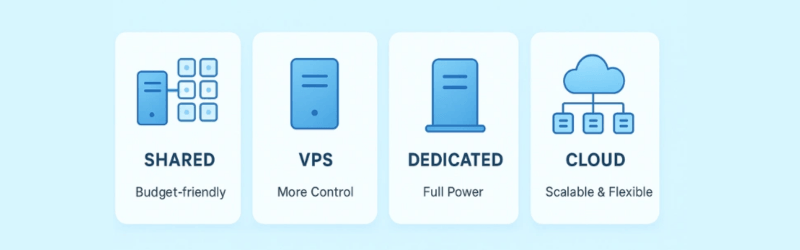
Different hosting environments support Python applications, but the performance and flexibility vary.
Shared Hosting
Shared hosting is the cheapest hosting option where multiple websites share the same server resources.
Advantages
- Low cost
- Easy to manage
- Suitable for beginners
Limitations
- Limited control over server configuration
- Restricted Python support
- Performance limitations
Shared hosting works best for small Python applications or development testing. Beginners often start with shared web hosting plans.
VPS Hosting
Virtual Private Server hosting provides dedicated virtual resources on a physical server.
Advantages
- Full control over server configuration
- Root access
- Ability to install Python libraries and frameworks
- Better performance
Most developers prefer VPS hosting for Python applications because it provides flexibility, performance, and server control.
Cloud Hosting
Cloud hosting distributes applications across multiple servers, ensuring high availability.
Advantages
- High scalability
- Load balancing
- High uptime
- Ideal for growing applications
Cloud hosting is suitable for Python applications that receive high traffic or require auto scaling.
Dedicated Server Hosting
Dedicated hosting provides an entire physical server for your application.
Advantages
- Maximum performance
- Full server control
- Ideal for high traffic applications
Large-scale applications often use dedicated servers for better control and reliability.
Best Python Frameworks for Web Applications
Django
Django is a full-stack Python framework that includes everything required to build secure web applications.
Key features:
- Built-in authentication
- ORM for database management
- Security features
- Admin dashboard
Django is widely used for enterprise applications and scalable platforms.
Flask
Flask is a lightweight Python framework that provides flexibility for developers.
Features include:
- Minimalistic structure
- Highly customizable
- Ideal for APIs and microservices
FastAPI
FastAPI is a modern Python framework designed for building APIs with high performance.
Benefits include:
- Fast performance
- Automatic documentation
- Asynchronous capabilities
How to Set Up Python Web Hosting
Step 1:Choose the Right Hosting Environment
For most Python projects, a Linux VPS server is recommended because it provides flexibility and performance. Many developers choose VPS hosting solutions to deploy Python frameworks and applications.
Step 2: Install Python
Install the required Python version using package managers.
Step 3: Create a Virtual Environment
Virtual environments isolate project dependencies.
Step 4: Install Project Dependencies
Install required libraries using pip.
pip install django flask gunicorn
Step 5: Configure the Web Server
Use servers such as:
- Gunicorn
- uWSGI
- Nginx
Step 6: Configure Reverse Proxy
Use Nginx to route requests to the Python application.

Performance Optimization for Python Hosting
Use Nginx as Reverse Proxy
Nginx improves performance by handling static content and routing requests efficiently.
Enable Caching
Caching reduces server load and improves response times.
Use Gunicorn Workers
Increasing worker processes allows handling multiple requests simultaneously.
Optimize Database Queries
Efficient database queries improve application performance significantly.
Use CDN
A content delivery network speeds up global website loading.
Security Best Practices for Python Hosting
Keep Python Updated
Always use the latest Python version to avoid vulnerabilities.
Secure Environment Variables
Sensitive data like API keys should never be stored directly in code.
Enable HTTPS
Install SSL certificates to secure website traffic and protect user data.
Use Firewalls
Configure server firewalls to block malicious traffic and protect hosting infrastructure.
How to Choose the Best Python Web Hosting Provider
- Python Version Support: Ensure the hosting provider supports the latest Python versions.
- Server Performance: Look for NVMe SSD storage and modern CPUs.
- Root Access: Root access allows installing libraries and configuring environments.
- Developer Tools: SSH access, Git deployment, and package management support are important.
- Scalability: Choose hosting that allows easy upgrades to cloud hosting or dedicated servers.
Future of Python Web Hosting
Python continues to grow in popularity due to its flexibility and integration with AI, machine learning, and automation tools.
Modern web applications increasingly rely on Python frameworks, APIs, and microservices. Hosting providers are also improving infrastructure with better container support, cloud scalability, and server automation.
This means Python web hosting will continue to evolve with better performance, security, and scalability options.
Conclusion
Python web hosting plays a crucial role in deploying modern web applications. Choosing the right hosting environment ensures better performance, scalability, and reliability.
Whether you are building a small web app, an API service, or a large-scale platform, Python hosting solutions such as VPS hosting, cloud hosting, and dedicated servers provide the infrastructure needed to run applications smoothly.
With proper setup, security practices, and performance optimization, Python applications can handle high traffic while maintaining fast loading speeds and stability.